
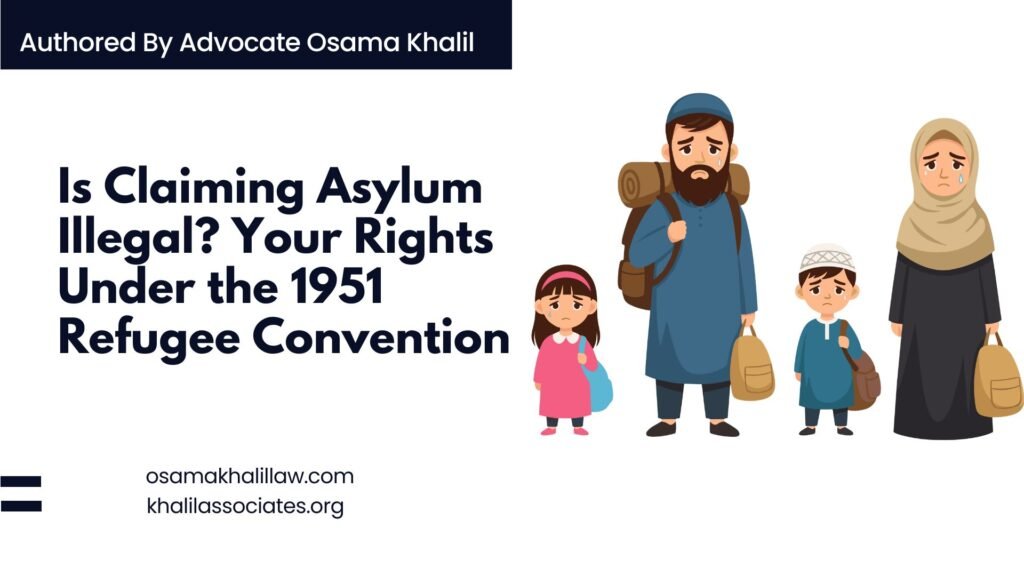
No, claiming asylum is not illegal. In fact, it is a fundamental human right. The act of seeking asylum from persecution is a legal process protected by international law. When people ask “is asylum seeking legal,” the answer is unequivocally yes. Every person has the right to seek safety from war or persecution. This right is the core principle of the 1951 Refugee Convention.
The Legal Foundation: The 1951 Refugee Convention
The 1951 Refugee Convention and its 1967 Protocol form the international legal framework for asylum. Over 140 countries, including the UK, have signed this treaty. The Convention clearly defines who is a refugee. It outlines the rights of displaced people and the legal obligations of nations to protect them. Your right to seek asylum finds its power in this document.
What is the Definition of a Refugee?
The Convention defines a refugee precisely. A refugee is someone outside their home country. They have a well-founded fear of persecution due to their race, religion, nationality, political opinion, or membership in a particular social group. They cannot or will not seek protection from that country. This definition is crucial. It separates refugees from migrants who move for other reasons.
The Right to Seek Asylum vs. “Illegal Entry”
A major point of confusion is between the act of seeking asylum and the method of entry. The Convention recognizes that people fleeing danger may need to use irregular means to escape. They might need to cross a border without documents or use a smuggler’s services. For this reason, Article 31 of the Convention contains a critical provision: the “non-penalization” clause.
This clause states that countries shall not punish refugees for their illegal entry or presence. This applies if they come directly from a territory where they faced a threat and present themselves to authorities without delay. Their claim must show good cause for their illegal entry. This principle makes the key distinction: while the entry might be irregular, the act of claiming asylum itself is never a crime.
Key Rights Under the 1951 Convention
The Convention grants refugees specific rights. Understanding these rights answers the question “is asylum seeking legal” with concrete examples.
The Principle of Non-Refoulement (Article 33): This is the most important rule. It means a country cannot forcibly return a refugee to a territory where their life or freedom would be threatened. This protection applies to all asylum seekers until authorities fully assess their claim.
Access to Courts (Article 16): Refugees have the right to access the legal system in their host country. They can pursue their asylum claim fairly.
Freedom of Movement (Article 26): Host countries should allow refugees to choose their place of residence and move freely within its territory.
Right to Work (Articles 17-19): The Convention encourages states to allow refugees to work and be self-sufficient.
Debunking Common Myths About Asylum
Several myths create the false idea that claiming asylum [is] illegal.
Myth: “Asylum seekers should claim asylum in the first safe country.”
Fact: The 1951 Convention does not contain this “first safe country” rule. It is a policy of the UK and EU, not international law. The Convention requires only that a person be outside their home country.
Myth: “Asylum seekers are ‘illegal immigrants’.”
Fact: An “illegal immigrant” is someone who enters or remains in a country without authorization and with no legal claim to stay. An asylum seeker enters a legal process immediately upon claiming asylum. Their status is pending, not illegal.
Myth: “People who destroy their documents are lying.”
Fact: People fleeing persecution often destroy documents to avoid identification by regimes that hunt them. It is a survival tactic, not proof of a false claim.
National Law and the Asylum Process
Countries that signed the Convention, like the UK, have their own national laws to process asylum claims. The UK’s Immigration Rules contain the detailed procedure. However, these domestic laws must operate within the framework of the international treaty. The UK Home Office must assess each claim against the Convention’s definition of a refugee. Therefore, engaging with this legal process is the correct way to exercise your 1951 refugee convention rights.
Conclusion: A Protected Right, Not a Crime
Claiming asylum is a legal and protected human right. The 1951 Refugee Convention establishes this right clearly. It provides protection from return to danger and outlines basic rights for those fleeing. The method of entry may involve irregular border crossing, but the law specifically protects refugees from penalty for this act when they seek safety. If you have a well-founded fear of persecution, seeking asylum is the lawful and correct path to protection. Always seek qualified legal advice to navigate the application process and uphold your rights under the law.
Legal Assistance
For professional legal guidance and support in court asylum matters, you may contact:
Mr. Osama Khalil
Lawyer & Legal Consultant
📞 Phone: 0316-1829946
📧 Email: contact@osamakhalillaw.com | contact@khalilassociates.org